Energy Saving Guide · Your geyser
Is your geyser quietly draining your budget?
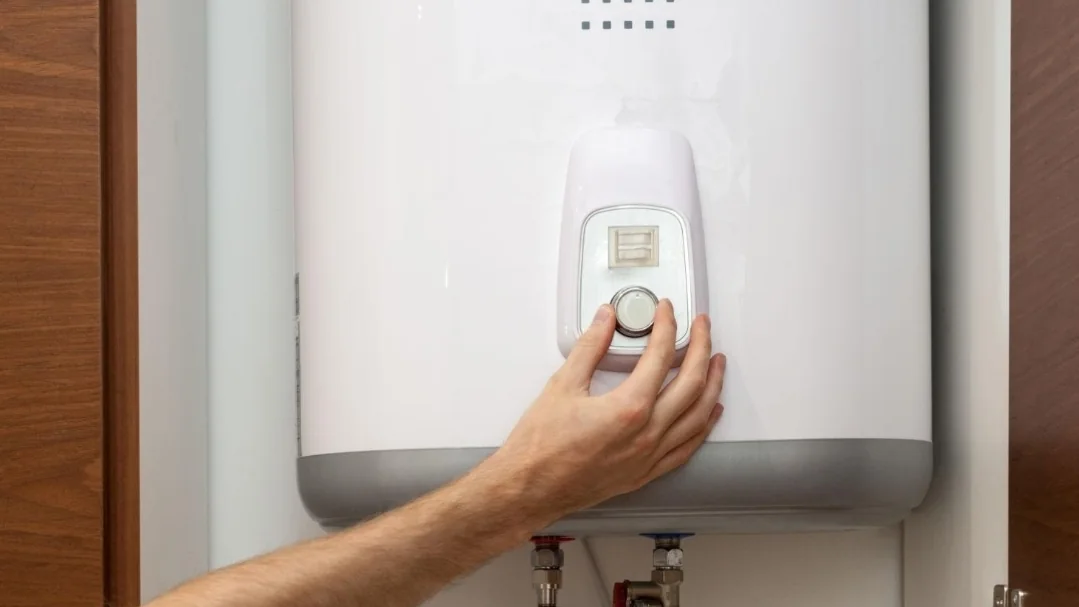
You switch off lights, you unplug the TV, and the units still vanish. Meanwhile there's a 150-litre tank in the roof that keeps itself hot all day and all night, whether anyone needs a shower or not.
In most electric-geyser homes, the geyser is the single biggest user of electricity. Eskom says it can take up to half of a household's power. Most of that cost comes from three things you can check: how hot it's set, how much heat it loses while it waits, and whether hot water is leaking away. A timer, a blanket and pipe insulation together cut geyser energy by roughly 15–25% in Stellenbosch University research. Measure first, then fix what's actually wrong.
Why a geyser costs so much
Heating water takes a lot of energy, and a geyser does it over and over.
Eskom says heating water uses the most energy in the average household, and that a geyser can account for up to 50% of a home's electricity. Stellenbosch University researchers put it at as much as 32% where an electric geyser is used. The share in your home depends on how many people shower, how long, and how the geyser is set up.
Here's the physics. Heating a full 150-litre tank from 15°C to 60°C takes about 7.9 kWh. At Tshwane's 401–650 block rate that's roughly R37, for one tank from cold.
The geyser doesn't only heat the water you use. It also reheats the water that's just sitting there.
The heat you pay for and never use
A hot tank loses heat all day. The element switches on to top it up, even if nobody opens a tap.
This is called standing loss. Since 2016, a new 150-litre geyser sold in South Africa must lose no more than 1.40 kWh in 24 hours under SANS 151 (Class B). Older Class E geysers were allowed about 2.6 kWh.
That's the tank alone, tested in a lab. In real homes, a US national lab study of South African geysers measured a median of about 172 W of standby loss for 150-litre units, including heat lost through the pipes and fittings. Running all day, that's about 4 kWh a day.
Uninsulated pipes in a cold roof are radiators you never asked for.
The four things that push the cost up
Each of these is a possible cause, not a guaranteed one. Check before you blame it.
1. Thermostat set too high. Eskom recommends 60°C and says you save about 3–5% for every 10°C you lower it. If yours is set at 70°C, there's a saving. If it's already at 60°C, leave it. Don't go lower (see the health note below).
2. Old or uninsulated tank and pipes. Eskom says newer geysers are well insulated, but older ones may not be, and recommends a blanket for older units plus cladding on exposed hot pipes.
3. Dripping hot tap or leak. Eskom puts a slow drip (60 drips a minute) at 11 935 litres a year. From a hot tap, every litre is water you heated and then sent down the drain.
4. A faulty thermostat or element. A thermostat that sticks can overheat the water, and a failing element can run longer than it should. Only a registered plumber or electrician should test these.
Interesting things about your geyser
- 150 litres is the standard size for a 2–4 person home, and a common element is 3 kW. That heats a full tank from cold in about 2 to 2.5 hours (Kwikot).
- 60°C isn't random. The WHO says water leaving a heater should be above 60°C, and should stay above 50°C in the pipes, to control Legionella bacteria. It also warns that very hot water can scald children and the elderly.
- The building rules already push away from plain electric geysers. SANS 10400-XA requires at least 50% of a new building's hot water to come from something other than electric resistance heating, such as solar or a heat pump.
- The drip tray has a job. SANS 10254 requires a drip tray with a drain pipe that discharges somewhere visible outside the building, so a leak shows up instead of soaking the ceiling.
A dripping hot tap is a geyser that never gets to rest.
What fixing it could save
These are estimates, not promises. Your saving depends on your geyser, your habits and how much you already do.
Example home in Tshwane: 600 units a month, with the geyser using 32–39% of that (192–234 kWh). Every unit saved comes off the top block at about R4.75.
| Fix | Researched saving | Estimated saving a month |
|---|---|---|
| Blanket + pipe insulation | 5–12% of geyser use | R46–R133 |
| Timer or smart controller | 9–18% of geyser use | R82–R200 |
| Timer + blanket + pipes together | 14.7–25.1% | R134–R279 |
| Thermostat 70°C → 60°C (only if it's set above 60°C) | 3–5% | R27–R56 |
| Fixing one slow-dripping hot tap | about 52 kWh a month | about R247 |
You can't add the rows up. Once a timer is cutting the hours the tank stays hot, a blanket has less heat left to save. That's why the combined figure is smaller than the rows added together.
Solar and heat pumps can cut water-heating electricity further, but they're a bigger investment. Get an assessment and a written quote before deciding.
How we worked out these numbers
Rate. City of Tshwane 2026/27, units 401–650: 413.27c/kWh excluding VAT, R4.75 including 15% VAT. These are the City's published figures; the gazette check is still pending.
Geyser share. 600 kWh × 32% = 192 kWh (Stellenbosch University). 600 kWh × 39% = 234 kWh (Eskom, 2015). Eskom's "up to 50%" is the upper bound, not a typical figure.
Saving. Geyser kWh × saving % × R4.75. For example, the low end for a blanket plus pipes is 192 × 5% = 9.6 kWh, or R46. The high end is 234 × 12% = 28.1 kWh, or R133.
Heating a tank. kWh = litres × 4.186 × temperature rise ÷ 3600. A 150-litre tank heated from 15°C to 60°C: 150 × 4.186 × 45 ÷ 3600 = 7.85 kWh.
Standing loss. The Class B cap is 1.40 kWh × 30.4 days = 42.6 kWh, or about R202 a month. The field median is 172 W × 24 h × 30.4 days = 126 kWh, or about R597 a month (including pipes).
Drip. 11 935 litres ÷ 12 = 995 litres a month, heated from 15°C to 60°C = 52 kWh, or about R247. This assumes 15°C inlet water and 60°C hot water; the real figure varies.
Your own figure. Replace 600 with your monthly units, and check which block your top units fall in.
Safety and health: don't open the geyser cover, the thermostat or the electrics yourself. Plumbing work on a geyser should be done by a PIRB-licensed plumber, who issues a plumbing Certificate of Compliance (CoC). Electrical work needs a registered electrician and an electrical CoC. Some municipalities and insurers also require a CoC, so ask. Don't set the thermostat below 60°C to save money, because of the Legionella risk.
Want to know what your geyser is really costing you? Lesedi Energy offers geyser assessments, smart controllers and timers, geyser blankets and pipe insulation, and fault checks. We'll measure first and recommend only what your geyser needs. Contact Lesedi Energy to book a geyser check.
Lesedi Energy: Smarter energy decisions start at home.
Sources (checked 16 Oct 2026)
- Geyser can use up to 50% of household electricity; 60°C setting; pipe insulation: Eskom, "Energy-wise ways to get ready for winter": https://www.eskom.co.za/energy-wise-ways-to-get-ready-for-winte/ (opens in a new tab)
- Geyser responsible for 39% of electricity costs (Eskom, 2015): https://www.gov.za/news/media-statements/eskom-energy-saving-tips-winter-10-jun-2015 (opens in a new tab)
- Water heating uses the most energy; 3–5% saving per 10°C; blanket for older geysers; 11 935 L/year drip: Eskom Energy Advisory Service factsheet (Nov 2020): https://www.eskom.co.za/eas/wp-content/uploads/2023/08/Hot-Water-management-Factsheet-FINAL.pdf (opens in a new tab)
- Up to 32% share; timer 9–18%; blanket + pipes 5–12%; combined 14.7–25.1%: Stellenbosch University: https://www.su.ac.za/en/node/3212 (opens in a new tab)
- SANS 151 Class B 1.40 kWh/24 h for 150 L; SANS 10400-XA 50% rule: LBNL, Residential Water Heating DSM – South Africa (2024): https://eta-publications.lbl.gov/sites/default/files/final_executive_summary_-_south_africa_water_heating_dsm_5.28.2024.pdf (opens in a new tab)
- Field standby loss of 172 W for 150 L: LBNL report: https://escholarship.org/content/qt7j57k0bm/qt7j57k0bm.pdf (opens in a new tab)
- 150 L most common; 3 kW element; heat-up time 2–2.5 h: Kwikot (manufacturer): https://www.kwikot.com/electric-geyser-guide (opens in a new tab)
- Legionella temperatures: WHO, via NCBI: https://www.ncbi.nlm.nih.gov/books/NBK535301/table/ch8.tab3/ (opens in a new tab)
- Drip tray requirement: Bell Buoy SANS 10254 compliance table: https://www.bellbuoy.co.za/file/5bbf42f0d6a9c/compliance-table-for-new-replacement-repair-and-maintenance-geyser-final.pdf (opens in a new tab)
- Plumbing CoC: PIRB: https://www.pirb.co.za/support-coc/ (opens in a new tab) ; IOPSA: https://www.iopsa.org/news/12918524 (opens in a new tab)
- Tshwane 2026/27 rate: City of Tshwane (City figures, gazette pending): https://www.tshwane.gov.za/?p=102188 (opens in a new tab)
- All rand figures: calculated (method above)