Energy Saving Guide · Heat season
Super El Niño, Extreme Heat and South Africa's Power Stations: Could Your Electricity Supply Be Under Pressure?
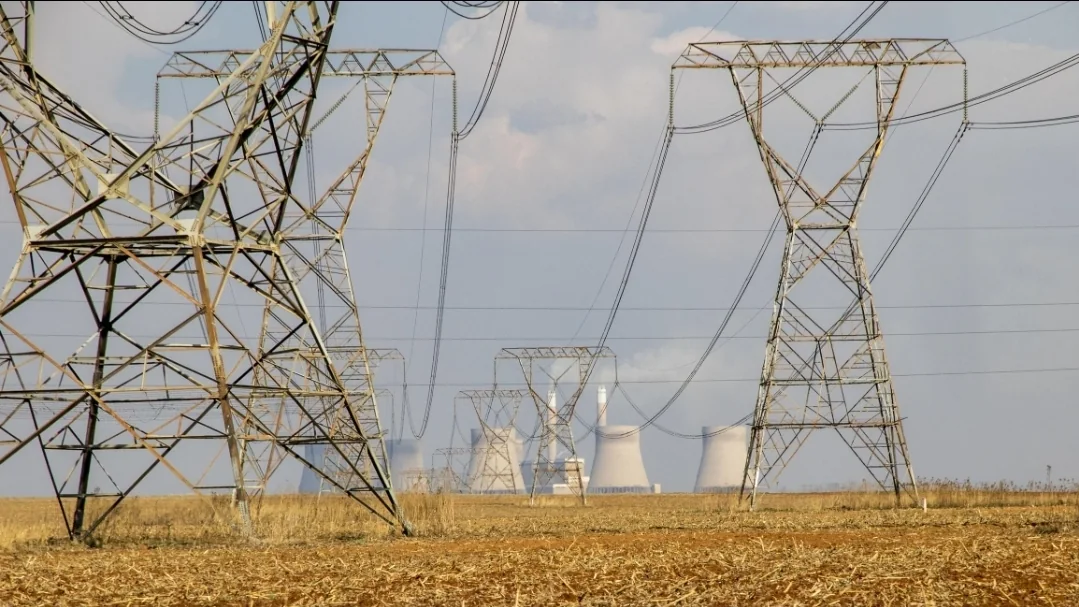
Imagine a South African summer where temperatures soar, air conditioners run for hours, fridges work harder and electricity demand climbs. But what happens when the infrastructure supplying that electricity is also exposed to extreme heat?
What forecasters say: "Super El Niño" is media shorthand, not an official term. NOAA's Climate Prediction Center (8 October 2026) (opens in a new tab) says a strong-to-very-strong El Niño is likely to last through January–March 2027, with a high chance it becomes the strongest on record since 1950. The SA Weather Service's 1 September 2026 statement (opens in a new tab) says a hotter, drier October–January is the most likely outcome for most of the country, though not every El Niño brings drought.
For millions of South Africans, hot weather means seeking shade, switching on a fan or turning up the air conditioner. But behind the plug in your wall is a much bigger system: power stations, transformers, substations, transmission lines and distribution networks that must continue operating under demanding conditions.
South Africa's electricity infrastructure faces a particular challenge. Much of our electricity has historically come from coal-fired power stations (opens in a new tab), many of which depend on complex cooling systems, water supplies and machinery operating at high temperatures (opens in a new tab).
When extreme heat coincides with existing equipment faults, maintenance problems or water constraints, the pressure on the electricity system can increase.
Here are five important things South Africans should understand.
1. Power stations have to manage heat too
A coal-fired power station works by burning fuel to produce heat, generating steam that drives a turbine connected to an electricity generator.
But producing electricity is only part of the process. The plant must also remove waste heat to condense steam (opens in a new tab) and maintain efficient operation.
When the surrounding air and cooling water become hotter, removing that waste heat can become more difficult (IEA Clean Coal Centre (opens in a new tab)). Depending on the plant's design and operating conditions, this can reduce efficiency or available output.
South Africa has different cooling technologies. Eskom's dry-cooled stations use air to remove heat (opens in a new tab) and reduce water consumption (opens in a new tab), but dry cooling can also become less effective in very hot weather. In February 2023, Eskom's then CEO reported a 600 MW load loss at Matimba (opens in a new tab), a dry-cooled station, because of the warm summer weather, and in September 2023 the Electricity Minister said warmer temperatures were causing partial load losses at some stations (opens in a new tab).
This matters because the cooling system is not an optional extra. It is part of how a thermal power station operates.
2. Extreme heat can place electrical equipment under additional stress
Power stations contain turbines, generators, motors, pumps, transformers, control systems and electrical connections. Many of these components produce heat during normal operation.
High ambient temperatures reduce the margin available to remove that heat.
Depending on equipment design, condition and operating limits, prolonged heat can contribute to:
- Higher operating temperatures in motors, transformers and electrical equipment.
- Reduced cooling performance and possible output limitations.
- Faster ageing of insulation materials (for transformers, see the IEEE C57.91 loading guide (opens in a new tab), which covers ambient temperature, insulation damage and loss of life).
- Thermal protection systems activating if equipment exceeds its safe operating limits.
- Increased maintenance requirements and a greater risk of failure where equipment is already degraded.
An important distinction: high temperatures do not automatically damage every power station. Well-maintained equipment is designed to operate within specified environmental limits. The concern is prolonged exposure, extreme operating conditions and equipment that has limited remaining capacity or existing faults.
3. The electricity grid can also feel the heat
The challenge does not end when electricity leaves the power station.
Transmission lines carry electricity over long distances, often across exposed landscapes. As electrical current heats a conductor, hot weather leaves less room for additional temperature rise (CIGRE/IEEE guidance on conductor ratings (opens in a new tab)).
Under certain conditions, overhead conductors can expand and sag closer to the ground or nearby infrastructure. Operators must manage conductor temperatures, clearances and transmission capacity (opens in a new tab).
Transformers and substations also rely on cooling to manage the heat produced as electricity flows through the network. Extreme ambient temperatures can reduce cooling margins and, depending on the equipment and loading, may require operational adjustments (IEEE C57.91 (opens in a new tab)).
This is why a reliable electricity system needs more than sufficient generation capacity. It also needs transmission and distribution infrastructure that can operate safely in extreme weather.
4. Water scarcity can make the problem more complicated
South Africa is a water-scarce country (opens in a new tab), and thermal power stations need water for various purposes, including cooling at wet-cooled plants and other operational processes.
Eskom uses wet, indirect dry and direct dry cooling systems (opens in a new tab). Dry cooling reduces water consumption (opens in a new tab), but it does not eliminate the effects of high ambient temperatures on plant performance.
Wet-cooled systems can face additional constraints when water availability is limited, while hotter cooling water can make heat rejection more difficult (opens in a new tab).
This creates a potential double challenge during hot, dry periods: higher cooling demand from households and businesses, alongside more demanding operating conditions for parts of the electricity system.
Climate-related risks to water availability and power generation are recognised in South African government climate reporting: the National Climate Change Adaptation Strategy (opens in a new tab) lists rising demand for water from power generation and greater evaporation from dams, and technical analysis supporting South Africa's second NDC (opens in a new tab) notes that rising temperatures are already limiting the cooling capacities of power stations.
5. What does this mean for ordinary households?
It does not mean that a heatwave will automatically cause load-shedding or that a power station will fail because the weather is hot.
Electricity supply depends on many factors, including available generating capacity, planned maintenance, unexpected faults, network constraints, fuel and water availability, and electricity demand.
However, when demand rises during extreme heat, the system may have less flexibility if generating units or network components are already unavailable or constrained.
For households, that is a good reason to prepare rather than panic.
Five ways to prepare your home
- Reduce heat entering your home. Close blinds on sun-facing windows and improve shading where possible.
- Maintain your air conditioner. Clean filters according to the manufacturer's instructions and ensure outdoor units have adequate airflow.
- Check your fridge and freezer. Inspect door seals and ventilation, and avoid placing hot food directly inside.
- Use electricity efficiently. Avoid unnecessary appliance use during periods of high demand, without compromising health or safety.
- Track your consumption. Compare meter readings over time so that you can distinguish increased usage from tariff or billing changes (see our tariff guide).
The bigger picture: resilience starts at home
South Africa's electricity infrastructure must meet today's needs while adapting to a climate in which extreme weather can create additional operational challenges.
That means maintaining existing power stations, improving grid resilience, managing water resources, upgrading vulnerable infrastructure and diversifying electricity generation and storage.
For households, resilience also means having better visibility and control over how energy is used. Lesedi helps households understand their electricity consumption, identify where energy is being used and make more informed decisions about efficiency, costs and future energy solutions. By turning household energy data into practical insight, Lesedi supports homes in reducing waste, preparing for periods of high demand and building greater energy independence over time.
A home that needs less energy to remain comfortable is better positioned to manage high electricity costs during a hot summer. Understanding your consumption is the first step towards making that possible.
You cannot control how hot the summer becomes. But you can prepare your home, understand your electricity consumption and make smarter energy decisions with Lesedi.
Lesedi Energy | Understand your energy. Prepare for the heat.
Sources (retrieved 16 Oct 2026)
- NOAA Climate Prediction Center, ENSO Diagnostic Discussion, 8 Oct 2026 (re-checked 16 Oct, unchanged): https://www.cpc.ncep.noaa.gov/products/analysis_monitoring/enso_advisory/ensodisc.shtml (opens in a new tab)
- SAWS ENSO statement, 1 Sep 2026, via SAnews: https://www.sanews.gov.za/south-africa/saws-warns-very-strong-el-nino-and-hotter-drier-spring-conditions (opens in a new tab)
- Eskom, "Cooling techniques at Eskom power stations" (CO-0005 Rev 15): https://www.eskom.co.za/wp-content/uploads/2021/08/CO-0005-Cooling-Techniques-Rev-15.pdf (opens in a new tab)
- Eskom Heritage, Kendal Power Station (dry vs wet cooling water use): https://www.eskom.co.za/heritage/kendal-power-station/ (opens in a new tab)
- Medupi FGD technology study (dry cooling cuts water from ~2 to 0.14 L/kWh): https://cer.org.za/wp-content/uploads/2021/12/App-B-474-10175-Medupi-FGD-Technology-Study-Report-Rev-2-0-FINAL.pdf (opens in a new tab)
- CSIR, Utility-scale power generation statistics (Jan 2025): https://www.csir.co.za/sites/default/files/2025-09/Utility%20Statistics%20Report_Jan%202025_Final.pdf (opens in a new tab)
- ESI Africa, Eskom CEO on the Matimba heat load loss (20 Feb 2023): https://www.esi-africa.com/industry-sectors/asset-maintenance/wet-coal-faulty-flues-and-starting-energy-trading-at-eskom/ (opens in a new tab)
- eNCA, Minister Ramokgopa on heat load losses (17 Sep 2023): https://www.enca.com/news/warmer-temperatures-causing-partial-losses-some-power-stations-ramokgopa (opens in a new tab)
- IEA Clean Coal Centre (CCC/256), "Water availability and policies for the coal power sector": https://usea.org/sites/default/files/media/Water%20availabiltiy%20and%20policies%20for%20the%20coal%20power%20sector%20-%20ccc256.pdf (opens in a new tab)
- IEEE C57.91-2025, guide for loading mineral-oil-immersed transformers: https://standards.ieee.org/ieee/C57.91/7163/ (opens in a new tab)
- CIGRE TB 299, weather parameters for bare overhead conductor ratings: https://www.e-cigre.org/publications/detail/299-guide-for-the-selection-of-weather-parameters-for-bare-overhead-conductor-ratings.html (opens in a new tab)
- South African Government, Water and sanitation: https://www.gov.za/about-sa/water-affairs (opens in a new tab) ; DWS Drought page: https://www.dws.gov.za/drought/ (opens in a new tab)
- DFFE, National Climate Change Adaptation Strategy (2019): https://www.dffe.gov.za/sites/default/files/docs/nationalclimatechange_adaptationstrategy_ue10november2019.pdf (opens in a new tab)
- Technical analysis for the adaptation component of SA's second NDC (UCT repository): http://hdl.handle.net/11427/42174 (opens in a new tab)